
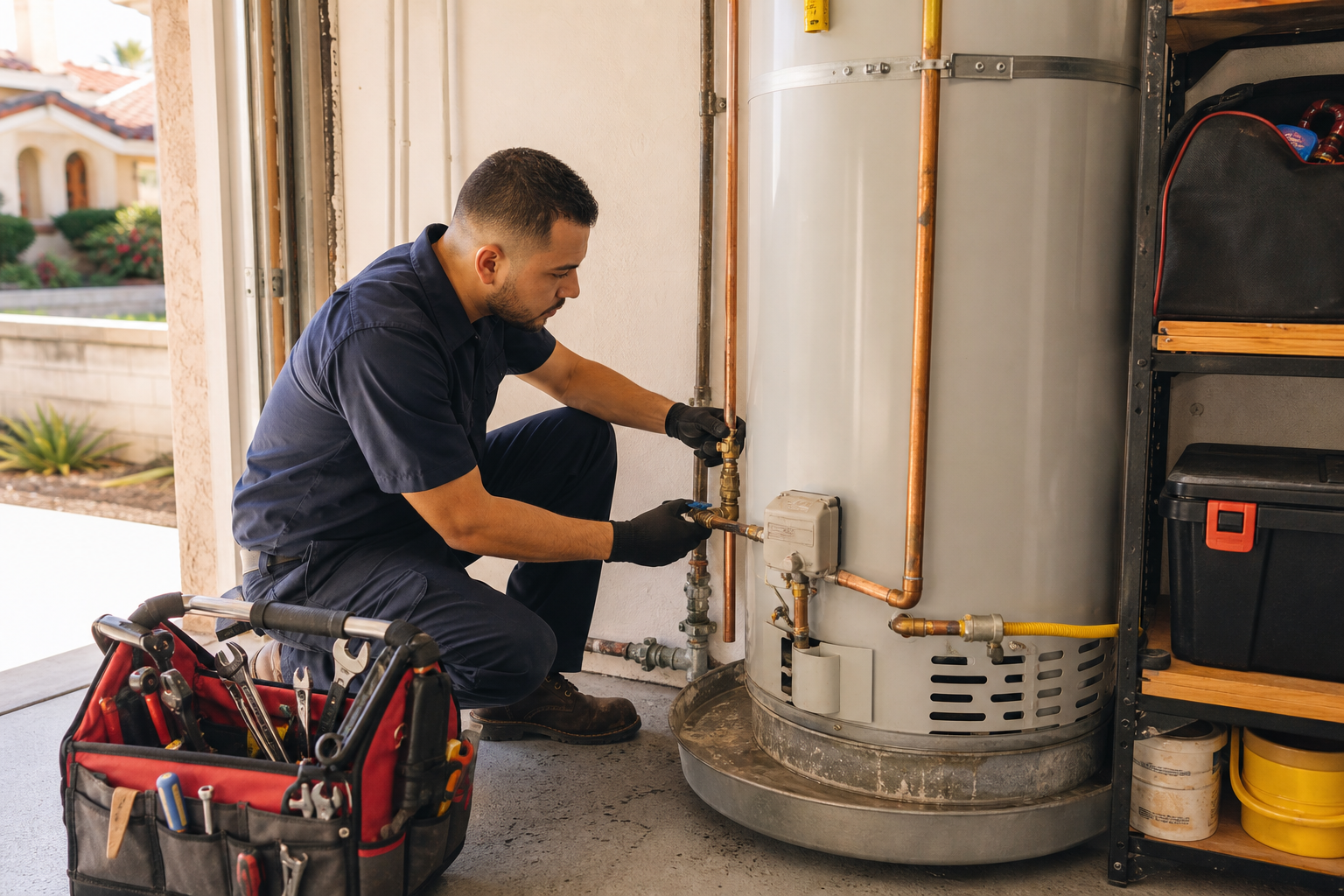
How Florence-Graham repair calls go sideways — and how to keep yours on track
Most repair frustration in older Florence-Graham homes comes from one of four places: access friction, hidden secondary failures, mis-diagnosed parts, or scope creep that nobody warned the owner about. Access friction is the easiest to prevent — clearing the garage, side yard, attic hatch, cleanout cap, or panel area before the visit lets the technician spend that hour on the diagnosis instead of the logistics. The other three need a tech who is willing to slow down for thirty minutes of verification before quoting a fix.
For drain cleaning, the verification step usually involves a small set of measurements: amp draw under load, pressure at a specific test point, resistance across a component, water-level behavior at a fixture, or a camera view past the obvious entry point. Those measurements are what separate a $200 repair from a $200 repair plus a return visit two weeks later. Ask whether your visit included them, and ask the technician to walk you through what each reading meant before they leave.
Central Southeast LA cluster context: The Central Southeast LA cluster has dense older housing, smaller lots, more rental property, and well-documented air-quality concerns from freeway and industrial corridors. Service work here leans toward urgent repair and emergency triage, and pages tend to emphasize practical safety over decorative comfort.
Quick answer for Florence-Graham homeowners
Drain Cleaning in Florence-Graham should start with a clear symptom, a clean access plan, and a realistic view of what can expand the scope. The visible problem may be root intrusion, grease blockage, sewer belly, but the visit can change when the property adds water shutoffs, county address verification, or tenant scheduling. In a garage conversions, the technician may need to reach the equipment, panel, drain, shutoff, cleanout, garage, side yard, attic, crawl space, or utility location before the real diagnostic work starts.
The most useful preparation is simple: use the external booking link, add photos, list the exact symptom, note whether another fixture or appliance is affected, and confirm who controls shutoffs or utility areas. If the call involves no cooling, active leaking, gas odor, burning smell, repeated breaker trips, water heater failure, or a backup that affects more than one fixture, treat it as urgent. If the symptom is stable, use the same process to plan a repair, replacement, or inspection-ready estimate without forcing an emergency premium.
Best first move
Book through the external form, then prepare these items: Stop running water into the clogged drain; Locate cleanouts; Avoid chemical drain cleaners; Note which fixtures are affected; Protect floors around backups. For Florence-Graham, add access notes for county address verification; tenant scheduling; tight parking; panel access; water shutoffs.
Why drain cleaning is different in Florence-Graham
Florence-Graham editorial note: Florence-Graham pages should be plainspoken and safety-first.
Florence-Graham sits in the Central Southeast LA service cluster and is best understood as a unincorporated Southeast LA community with old homes and high repair demand. Homes around Florence Avenue, Compton Avenue, Blue Line corridor can combine older single-family homes, duplexes, small apartments, rental houses, garage conversions on the same few blocks. That mix matters because the same drain cleaning call can require different equipment, ladder access, shutoff windows, garage or side-yard clearance, tenant scheduling, old-panel review, or cleanup protection depending on the property. A postwar tract home may have a slab foundation and old ducts. A small rental may have limited panel labeling and high plumbing use. A compact lot may hide old pipes, old wiring, or nonstandard mechanical routing behind newer finishes.
The local utility context is also part of the plan: City of Los Angeles pockets may involve LADWP or LADBS context by address, while neighboring incorporated cities usually differ. The permit and inspection context is LA County permit context may apply; nearby LA City addresses require verification. For drain cleaning, the permit question is: Basic drain clearing usually does not require permits; sewer repair, excavation, pipe replacement, or lateral work can. That does not mean every small diagnostic requires a major permit process. It means the repair should be separated from permanent replacement, new circuit work, gas or venting changes, sewer or pipe work, equipment relocation, or any scope that changes the building system.
Florence-Graham data-point snapshot
Reference points: Florence Avenue; Compton Avenue; Blue Line corridor. Building mix: older single-family homes; duplexes; small apartments; rental houses; garage conversions. Access profile: county address verification; tenant scheduling; tight parking; panel access; water shutoffs. Risk profile: overloaded circuits; drain backups; old water heaters; gas appliance concerns; portable AC loads. Seasonal operating context: SELA air-quality burden; heat island streets; storm drain problems. Nearby comparison markets for routing and internal links: Walnut Park, Huntington Park, South Gate, Willowbrook, Lynwood.
Drain cleaning lens
Drain cleaning pages should distinguish fixture clogs from main-line symptoms, repeat backups, grease, roots, cleanout access, and when camera inspection is worth the extra step. In Florence-Graham, that lens is filtered through water shutoffs, county address verification, garage conversions, and portable AC loads. This is the reason the page does not treat drain cleaning as a city-name swap: the service decision changes when the home, access, utility, and failure mode change.
A good note says which fixtures are affected, whether water rises elsewhere, whether there is a cleanout, whether chemicals were used, and whether backups repeat after rain or laundry. The weak shortcut is snaking the same line again without asking why the backup repeats or whether a camera, cleanout repair, or sewer-lateral plan is needed.
- affected fixture count checked against overloaded circuits and county address verification
- cleanout location checked against drain backups and tenant scheduling
- repeat backup history checked against old water heaters and tight parking
- grease or root indicators checked against gas appliance concerns and panel access
- camera inspection trigger checked against portable AC loads and water shutoffs
A useful Florence-Graham dispatch note should sound different from a nearby-market note. For this page, the important local signals are Florence Avenue, older single-family homes, county address verification, overloaded circuits, and SELA air-quality burden. Those details change how drain cleaning is quoted, staged, diagnosed, and explained. They also help the visit avoid the common failure pattern where the technician arrives with the right trade skill but the wrong access assumptions.
From the truck — drain cleaning field journal
Drain calls in Florence-Graham divide into single-fixture clogs and main-line backups. The truck carries cable machines for drum and sink lines, sectional cables for laterals, hydro-jet equipment for grease and root buildup, and a sewer camera for the main-line cases that warrant it. Repeat backups always trigger a camera before the third snake.
Real call from the field
Bellflower, kitchen and laundry both backing up at the same time — meaning the main, not a fixture. Found cleanout at the side of the house, ran the camera, recorded root intrusion at the second joint from the building. Cleared with cable + hydro-jet for now, gave written quote for the lateral repair when the owner is ready. No upselling, just clear evidence and clear options.
Repeat backups are the camera's job, not the snake's job. If I am cabling the same line a third time, I am working against the customer's interest.
Code, permit, and inspection context for drain cleaning
Code references that govern this work
- CPC Chapter 7 — sanitary drainage
- CPC 707 — cleanouts (location, size, accessibility)
Permit window
Drain cleaning itself does not require a permit. Permit is triggered when repair includes pipe replacement, cleanout addition, or sewer-lateral work.
Typical visit duration
45–90 minutes for typical residential clog. Hydro-jet add-on extends to 90–120 minutes. Camera inspection adds 30–45 minutes.
Inspection points we verify
- Affected fixture count documented (single vs multi-fixture suggests main vs branch)
- Cleanout location and accessibility assessed
- Camera evidence reviewed for repeat-call situations
- Rule out sewer-lateral involvement before quoting drain-only solution
What is on the truck
drum machine for 1.5–2 inch lines, sectional cable for 3–4 inch laterals, hydro-jet for grease/root buildup, sewer camera with locator.
Five questions to ask before approving drain cleaning work
The contractor's answers to these questions tell you whether the visit is going to be diagnostic-led or shortcut-led. There are no trick questions here — these are the questions a thoughtful tradesman is glad to be asked.
- Are multiple fixtures affected (main-line) or just one (fixture/branch)?
- Where is the cleanout, and can it be accessed without entering the house?
- Is a camera inspection included if the clog is a repeat?
- Will hydro-jet damage older clay or galvanized pipe? (Diagnose first before jetting old pipe.)
Common mistakes to avoid in Florence-Graham
Most of these come from rushing diagnosis or quoting before measurement. They show up across Florence-Graham on calls our techs end up cleaning up after another contractor.
- Snaking the same line repeatedly without a camera
- Hydro-jetting old clay or compromised pipe — can blow out fragile sections
- Pouring chemical drain cleaner before mechanical clearing — damages plumber's snake and pipe
- Treating a lateral problem like a fixture clog — owner pays multiple times for the same symptom
Repair, replace, or inspection — decision criteria
Mechanical clearing is correct for first-time clogs and confirmed branch issues. Camera inspection is correct after a second clog within 12 months, or when the symptom suggests main-line. Pipe repair is correct when the camera shows structural damage, not just buildup.
Common failure modes and hidden risks
For this service, the common technical risks include root intrusion, grease blockage, sewer belly, repeat backup, overflow damage. In Florence-Graham, local risks such as overloaded circuits, drain backups, old water heaters, gas appliance concerns, portable AC loads can make those symptoms more expensive or more urgent. A cooling failure may be caused by a small part, but condenser condition, airflow restrictions, dusty coils, or electrical disconnect problems can change the visit. A panel or EV charger issue may look like one circuit, but load calculations, utility coordination, or old grounding can decide whether the work is safe. A plumbing leak may look contained, but water can move under slabs, behind cabinets, through walls, and toward electrical areas faster than most owners expect.
Do not keep resetting breakers, running water into a backed-up drain, using a leaking water heater, or operating HVAC equipment that smells hot or is spilling water. Those actions can turn a repair into broader home damage. The safer path is to isolate what you can, document the symptom, protect nearby areas, and book a visit with complete access notes.