
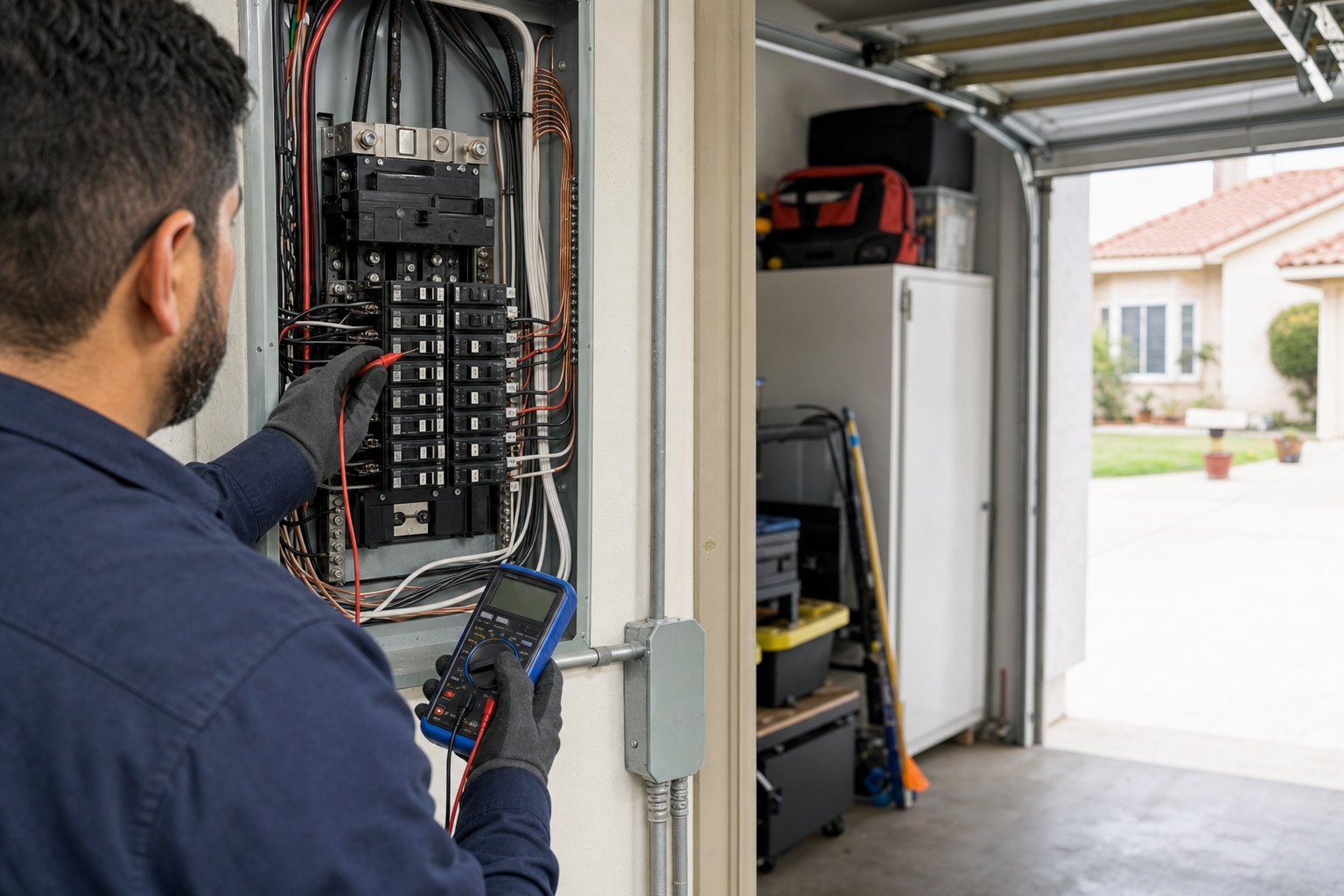
Why the installation quote should ask more questions than it answers
A good installation quote in Signal Hill starts with questions, not with a price. The questions sound technical but they protect the homeowner: what is the make and model of what is being replaced, what is the panel size and main breaker rating, what is the supply pipe size or duct configuration, where is the equipment going to live, what is the conduit or vent route, and what is the inspection authority for this address. A quote that skips those questions and just lists a flat number for EV charger installation is selling a guess.
Signal Hill adds a few specific questions. The cluster context — Long Beach and Harbor — and the building stock in this part of the city change which assumptions are safe. Postwar tract homes have different access realities than newer townhomes. Garage panels have different capacity profiles than meter-main combos. Long Beach addresses have different permit paths than LA County addresses. The right installer asks those questions before printing a number, then writes the answers into the quote.
Long Beach and Harbor cluster context: The Long Beach and Harbor cluster mixes coastal moisture, port-driven particulate, municipal-utility complexity, and a building stock that ranges from 1920s bungalows to mid-century duplexes. Service work here often crosses jurisdictional lines — Long Beach Utilities versus SCE versus county-served pockets — and the contractor has to know which rules apply to your specific block.
Quick answer for Signal Hill homeowners
EV Charger Installation in Signal Hill should start with a clear symptom, a clean access plan, and a realistic view of what can expand the scope. The visible problem may be undersized panel, wrong breaker size, long conduit run, but the visit can change when the property adds short parking windows, steeper driveways, or tight side-yard condenser access. In a small apartment buildings, the technician may need to reach the equipment, panel, drain, shutoff, cleanout, garage, side yard, attic, crawl space, or utility location before the real diagnostic work starts.
The most useful preparation is simple: use the external booking link, add photos, list the exact symptom, note whether another fixture or appliance is affected, and confirm who controls shutoffs or utility areas. If the call involves no cooling, active leaking, gas odor, burning smell, repeated breaker trips, water heater failure, or a backup that affects more than one fixture, treat it as urgent. If the symptom is stable, use the same process to plan a repair, replacement, or inspection-ready estimate without forcing an emergency premium.
Best first move
Book through the external form, then prepare these items: Photograph the panel; Measure panel-to-parking distance; Choose charger amperage; Confirm Wi-Fi needs; List future heat-pump or appliance plans. For Signal Hill, add access notes for steeper driveways; tight side-yard condenser access; garage panel location; utility easements; short parking windows.
Why EV charger installation is different in Signal Hill
Signal Hill editorial note: Signal Hill needs coastal and utility-access copy with its own Long Beach border context.
Signal Hill sits in the Long Beach and Harbor service cluster and is best understood as a compact hill-and-oil-field-adjacent city surrounded by Long Beach. Homes around Hilltop neighborhoods, Cherry Avenue corridor, Long Beach border streets can combine older hillside-adjacent homes, small apartment buildings, townhomes near commercial corridors, garage mechanical spaces on the same few blocks. That mix matters because the same EV charger installation call can require different equipment, ladder access, shutoff windows, garage or side-yard clearance, tenant scheduling, old-panel review, or cleanup protection depending on the property. A postwar tract home may have a slab foundation and old ducts. A small rental may have limited panel labeling and high plumbing use. A compact lot may hide old pipes, old wiring, or nonstandard mechanical routing behind newer finishes.
The local utility context is also part of the plan: Southern California Edison electric service is typical, with SoCalGas context for gas furnaces, water heaters, dryers, ranges, and gas line safety. The permit and inspection context is local city building department or LA County Building and Safety depending on address, with mechanical, electrical, plumbing, and sewer scopes verified before work. For ev charger installation, the permit question is: EV charger circuits usually require electrical permits and inspection, with utility and load-planning questions depending on existing service. That does not mean every small diagnostic requires a major permit process. It means the repair should be separated from permanent replacement, new circuit work, gas or venting changes, sewer or pipe work, equipment relocation, or any scope that changes the building system.
Signal Hill data-point snapshot
Reference points: Hilltop neighborhoods; Cherry Avenue corridor; Long Beach border streets. Building mix: older hillside-adjacent homes; small apartment buildings; townhomes near commercial corridors; garage mechanical spaces. Access profile: steeper driveways; tight side-yard condenser access; garage panel location; utility easements; short parking windows. Risk profile: coastal corrosion; older sewer lines; panel limitations; water pressure variation; AC equipment exposed to salt air. Seasonal operating context: marine layer mornings; hot upper exposures; wind-driven dust near corridors. Nearby comparison markets for routing and internal links: Long Beach, Lakewood, Carson, Bellflower, Paramount.
EV charger installation lens
EV charger pages should separate charger mounting from the harder questions: panel capacity, conduit route, load management, parking position, and future electric appliances. In Signal Hill, that lens is filtered through short parking windows, steeper driveways, small apartment buildings, and AC equipment exposed to salt air. This is the reason the page does not treat ev charger installation as a city-name swap: the service decision changes when the home, access, utility, and failure mode change.
A strong booking note includes panel photo, parking distance, preferred charger amperage, wall material, Wi-Fi needs, and whether a heat pump or electric water heater may follow. The weak shortcut is installing the largest breaker a charger can accept without proving load capacity, wire size, conduit path, and inspection requirements.
- panel load and spare space checked against coastal corrosion and steeper driveways
- charger amperage checked against older sewer lines and tight side-yard condenser access
- conduit distance checked against panel limitations and garage panel location
- garage wall material checked against water pressure variation and utility easements
- future electrification plans checked against AC equipment exposed to salt air and short parking windows
A useful Signal Hill dispatch note should sound different from a nearby-market note. For this page, the important local signals are Hilltop neighborhoods, older hillside-adjacent homes, steeper driveways, coastal corrosion, and marine layer mornings. Those details change how ev charger installation is quoted, staged, diagnosed, and explained. They also help the visit avoid the common failure pattern where the technician arrives with the right trade skill but the wrong access assumptions.
From the truck — EV charger installation field journal
EV charger work in older garages turns into conduit work more often than circuit work. Most modern chargers can be sized to almost any panel that has reasonable spare capacity — the harder problem is the path from the panel to the parking position. The team brings flexible conduit, EMT, surface-mount raceway, and load-management hardware for cases where the panel cannot quite handle a full-amp dedicated charger.
Real call from the field
Bellflower 1955 home with a 100A panel and a Bolt EUV. Customer wanted full-amp Level 2 charging but the panel could not support 60A continuous on top of existing loads. We installed a load-management device that sheds the dryer when the EV charges — keeps the homeowner on a 100A panel, gets full charging speed, all permitted. About half the cost of a panel upgrade with the same outcome for their use case.
EV charging is a wire and a circuit, not a project. Most of my install time is conduit fishing and finish protection — the electrical part is straightforward when sized correctly. The trick is doing it permitted, with the right load math, so it still works two appliances from now.
Code, permit, and inspection context for EV charger installation
Code references that govern this work
- NEC Article 625 — electric vehicle power transfer system
- NEC 625.40 — branch circuit ampacity for EVSE
- NEC 625.42 — EVSE rating
- California Building Code Section 4.106.4 — EV-ready / EV-capable for new construction (informs retrofits)
Permit window
Permit required in every Gateway Cities jurisdiction for the dedicated circuit and EVSE installation. Most cities offer expedited permitting for residential EV chargers. Typical inspection 5–10 business days.
Typical visit duration
4–8 hours for a clean install on a panel with spare capacity and short conduit run; 1–2 days if conduit fishing or load management is involved.
Inspection points we verify
- Continuous load calculation per NEC 625.40 (EVSE is continuous load — circuit sized to 125% of charger rating)
- Conduit size and fill compliant with NEC 358
- GFCI protection per latest code edition
- Disconnecting means within sight of EVSE if required by jurisdiction
- Surge protection considered for high-value charging equipment
What is on the truck
3/4 or 1 inch EMT or LFMC conduit, appropriate copper conductor for amperage and run length, 60A or 50A breaker (most common), load management module (DCC-9, DCC-10, etc.) when panel capacity is tight.
Five questions to ask before approving EV charger installation work
The contractor's answers to these questions tell you whether the visit is going to be diagnostic-led or shortcut-led. There are no trick questions here — these are the questions a thoughtful tradesman is glad to be asked.
- Is my panel large enough for a 50A or 60A EVSE on top of existing load — or do we need load management?
- What is the conduit route and is wall-cutting required?
- Is the EVSE hardwired or plug-in (NEMA 14-50)? Both are valid; tradeoffs differ.
- Is the charger location protected from direct rain/sun and reachable from my parking position?
- Does the install qualify for any utility rebate (SCE Pre-Owned EV rebate, Charge Ready Home, etc.)?
Common mistakes to avoid in Signal Hill
Most of these come from rushing diagnosis or quoting before measurement. They show up across Signal Hill on calls our techs end up cleaning up after another contractor.
- Sizing the breaker to match the charger nameplate instead of 125% (continuous load rule) — fails inspection
- Plug-in install (NEMA 14-50) without checking if the receptacle is rated for continuous EVSE use
- Long conduit runs without adjusting wire size for voltage drop
- Skipping load management when the panel is borderline — works on day one, trips on a hot day with AC
Repair, replace, or inspection — decision criteria
Hardwired install is preferred for permanent home charging — fewer points of failure and no NEMA receptacle limit. Plug-in (NEMA 14-50) is fine if you may move the charger or live in a rental. Load management beats panel upgrade when budget is tight and total household load is the only constraint.
How ev charger installation is sequenced step by step
This sequence is what a properly run ev charger installation project looks like — written for the homeowner who wants to know what should be happening and when.
- Panel capacity and load math. Confirm the panel has the spare capacity for a 50A or 60A continuous EVSE circuit (sized to 125% of charger rating per NEC 625.40). If not, decide between panel upgrade or load-management device.
- Conduit route planning. Map the path from the panel to the parking position. Most install time is conduit fishing — the electrical work itself is brief.
- Permit and circuit details. Pull the electrical permit. Confirm AFCI/GFCI requirements for the jurisdiction's code year.
- Conduit and conductor pull. Run EMT or LFMC conduit per NEC 358, pull the appropriate copper conductors for the amperage and run length, terminate at the panel and EVSE locations.
- Charger mount and connection. Mount the EVSE securely, terminate the conductors at the charger, set the breaker in the panel, and verify the charger commissions correctly.
- Inspection. Final electrical inspection verifies wire size, breaker size, conduit, and EVSE installation per NEC 625.
Common failure modes and hidden risks
For this service, the common technical risks include undersized panel, wrong breaker size, long conduit run, overloaded service, garage access conflicts. In Signal Hill, local risks such as coastal corrosion, older sewer lines, panel limitations, water pressure variation, AC equipment exposed to salt air can make those symptoms more expensive or more urgent. A cooling failure may be caused by a small part, but condenser condition, airflow restrictions, dusty coils, or electrical disconnect problems can change the visit. A panel or EV charger issue may look like one circuit, but load calculations, utility coordination, or old grounding can decide whether the work is safe. A plumbing leak may look contained, but water can move under slabs, behind cabinets, through walls, and toward electrical areas faster than most owners expect.
Do not keep resetting breakers, running water into a backed-up drain, using a leaking water heater, or operating HVAC equipment that smells hot or is spilling water. Those actions can turn a repair into broader home damage. The safer path is to isolate what you can, document the symptom, protect nearby areas, and book a visit with complete access notes.